Staining, chinking, and log repair
What log home refinishing involves in Jackson Hole: stripping and staining, chinking repair, rot and log replacement, and the product limits that set timing.
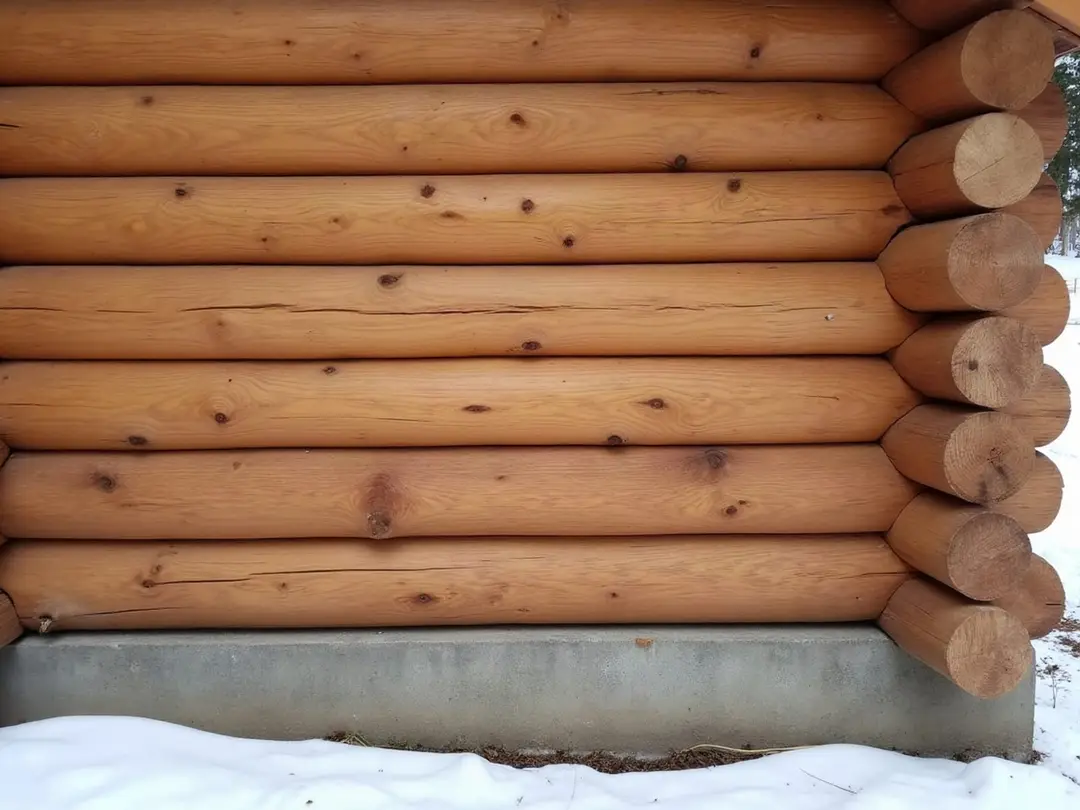
Log home work falls into five kinds of job. Many houses need two or three of them at once. Prep and any log repair come first; chinking and stain follow, in an order that depends on the products. Knowing which job your house needs helps you read a quote and compare one contractor's scope with another's.
Maintenance restain
If the old finish is worn thin but still sound, a contractor cleans the logs and puts on a fresh coat. The Wood Handbook from the USDA Forest Products Laboratory describes this as the simple case for penetrating stains: brush off dirt and loose fibers, remove any mildew, and restain. It adds that a second application of penetrating stain often lasts longer than the first, because it soaks into the more porous weathered surface.
Exposure is uneven. The Wood Handbook notes that an area under the eaves can stay less weathered than the lower part of the same wall, and that stain may not penetrate well there. Ask how the restain will handle the sheltered and exposed parts of each wall.
Full strip and refinish
When the finish has peeled, gone gray in patches, or built up into a film, it has to come off. Three methods are common, and each has a tradeoff:
- Media blasting with crushed corn cob or glass removes old finish and gray wood fast. It can leave a rough surface, and the Wood Handbook lists sandblasting and aggressive power washing among the causes of a washboard surface on wood.
- Chemical stripping softens the finish so it can be washed off. It has its own temperature limits: Perma-Chink rates its StripIt remover at 55°F to 90°F and its S-100 at 50°F to 90°F.
- Sanding gives the most control on small areas and costs the most time on a whole house.
Stripped logs have to dry before stain goes on. Sashco's Capture data sheet calls for log moisture content of 19% or less, and it says to stain no more than 2 weeks after prep is complete.
Chinking and sealant repair
Chinking is the flexible sealant in the joints between logs. Failed chinking gets cut out, foam backer rod goes in to set the joint depth, and new sealant is tooled over it. Perma-Chink rates its sealants for log surfaces between 40°F and 90°F, says never to apply sealant in direct sunlight, and says sealants may take a few weeks to cure in summer and a couple of months in winter. That cure time is one more reason chinking goes early in the season.
Rot repair and log replacement
Soft wood at the bottom course, under windows, or at log ends that stick out past the roofline points to rot. Repair runs from cutting out a small piece and fitting a patch to replacing a full log. Teton County, Wyoming's permit table lists exterior finish work as not needing a building permit, but it doesn't list log replacement as finish work, and a log wall carries the house, so ask the building department before it starts. In the Town of Jackson and Teton County, Wyoming, log or siding replacement can also raise wildland-urban interface questions, and Jackson Hole Fire/EMS handles WUI permits. The permits guide covers each office.
Interior refinishing
Inside walls see no sun or snow, so interior work comes down to cleaning, light sanding, and a clear or tinted finish. It can happen in any month, which makes it a reasonable winter job when the exterior season is closed.
Picking a finish
Finishes for log walls run from penetrating stains to film-forming coatings. The Wood Handbook's data for exterior wood in general shows the tradeoff. Two coats of semitransparent penetrating stain may last 10 years on rough or saw-textured wood, while one coat on new smooth wood may last only 2 to 4 years. Film-forming finishes can last longer, but the Handbook warns that they don't bond to weathered areas and are prone to peeling on sunburned wood. Penetrating finishes don't peel and need less prep when it's time to recoat. These figures come from siding studies, not log walls, so treat them as a guide to the tradeoff.
One safety note: the Wood Handbook warns that rags and sponges wet with oil-based stain can catch fire on their own, and it says to put them in water in a sealed metal container right after use.
Costs
This site doesn't publish a labor range, because it couldn't find a reliable local dataset. For materials, Perma-Chink's June 2026 list price for Lifeline Ultra-2 is $119.99 a gallon, with stated coverage of 350 to 450 square feet a gallon on the first coat and 600 to 800 on the second. Ask each contractor to price stripping, chinking, staining, and repair as separate lines.
For how the steps fit together on a real job, see how a restoration usually runs. To check which office handles your address, see the permit offices page. Ready to describe the house? Send a request.
Send a request
This site publishes planning information and does not perform log home work. A request sent here goes to an independent local contractor, who may contact you about it.
(307) 284-4423 Send a log home requestLocal conditions
Checked October 2026
Common questions
Do I need a permit to stain or re-chink a log home?
Staining and refinishing are generally treated as finish work. Teton County, Wyoming's building code resolution and the City of Driggs both list exterior painting and similar finish work as not needing a building permit, though the county calls its table a guideline only. Replacing logs or repairing structural rot is different and may need a permit. Check with the jurisdiction for the property: Town of Jackson Building Department (307-733-0440 ext. 1352), Teton County, WY (307-733-7030), City of Driggs (208-354-2362), City of Victor (208-274-7082), or Teton County, ID (208-776-8171).
When can exterior staining happen in Jackson Hole?
Product labels set the limits, and they differ by product. Perma-Chink's stain labels call for log surface temperatures between 40°F and 90°F during application, and Perma-Chink warns never to stain frozen logs. Sashco's Capture data sheet requires air and surface temperatures of 40°F to 90°F for the rest of the day after application, including overnight. NOAA's normals for Jackson put the average May and September lows near freezing. Capture's overnight rule leaves a narrower window.
What does elevation do to a log finish?
UV gets stronger with altitude. The World Health Organization's rule of thumb is about 10% more UV per 1,000 meters, which puts Jackson, at roughly 1,900 meters, near 19% above sea level. Snow adds to it: WHO says snow can reflect up to 80% of UV, and the EPA says snow can nearly double UV strength in winter. UV breaks down the lignin that holds wood fibers together, and it degrades finishes.
What is the difference between media blasting and chemical stripping?
Media blasting uses crushed corn cob, glass, or similar material under air pressure to take off old finish and grayed wood. Chemical strippers soften the finish so it can be washed off, and they have their own temperature limits: Perma-Chink lists StripIt at 55°F to 90°F. Either way, the logs have to dry before stain goes on.
Does a contractor need a license for log home work here?
Inside Jackson's town limits, ask the Town. In Idaho, contractors must register with the state under Idaho Code 54-5204, with exemptions that include a single project under $2,000. Ask any contractor for the license or registration number and a certificate of insurance.
Do wildland-urban interface rules apply to log homes?
Since January 1, 2025, every private parcel in the Town of Jackson and Teton County, Wyoming falls under the 2024 Wildland-Urban Interface Code. Re-roofs and interior-only projects don't need a WUI permit. Log or siding replacement can raise WUI questions, and Jackson Hole Fire/EMS handles WUI permits.
What if the home is on the Jackson Historic Register?
Listing on the Jackson Historic Register is voluntary and requires the owner's consent. A listed property needs a Certificate of Appropriateness from the Town for any significant change, so ask the Town of Jackson before changing materials or appearance.
Planning work on a log home?
Describe the home and what it needs. The request goes to an independent local contractor.
Towns covered
- Jackson
- Jackson Hole
- Wilson
- Teton Village
- Driggs, ID
- Victor, ID
Landmarks
- Grand Teton National Park
- Jackson Hole Mountain Resort
- Town Square
- National Museum of Wildlife Art
- Snake River